In today’s fast-paced UK retail and hospitality environment, managing sales, inventory, and customer experience efficiently is crucial. A POS system—short for 'Point of Sale' system—has evolved far beyond the traditional cash register. Modern POS solutions combine hardware, software, and cloud technology to streamline operations for shops, restaurants, and cafes.
Leading UK providers like Moneypex POS, Lightspeed POS, EPOS Now, Zettle by PayPal, TouchBistro, and SumUp POS are shaping how businesses handle transactions, inventory, and reporting. This guide will explain what a POS system is, how it works, its key components, and the real-world benefits UK businesses can expect.
1. What is a POS System?
Definition and Core Functions
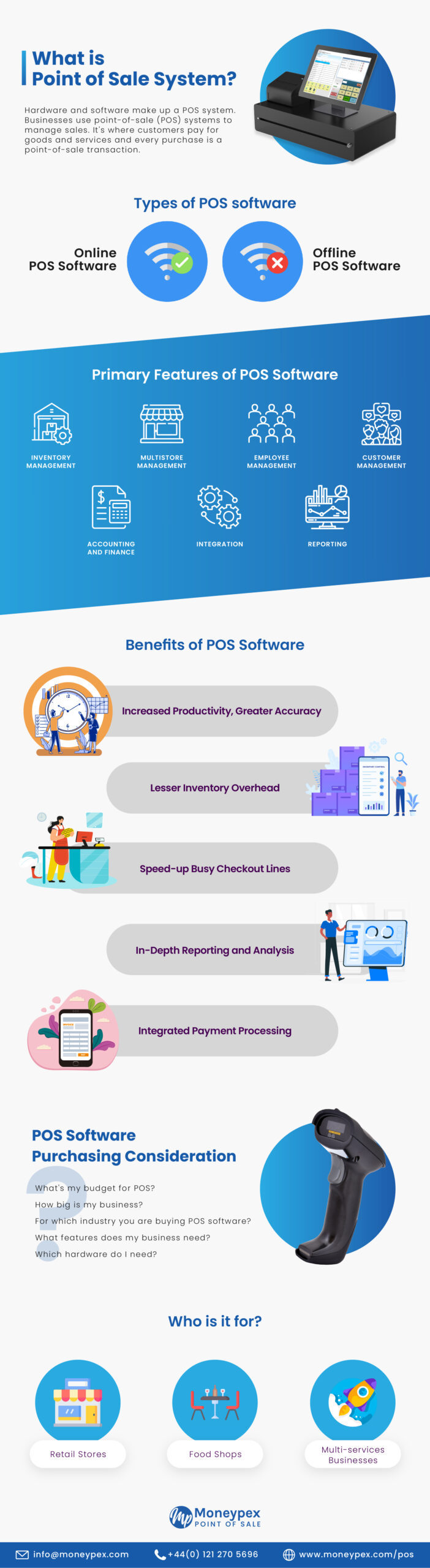
A POS system is the technology used to process sales and manage business operations at the point of purchase. While a traditional cash register only calculates totals, modern POS systems offer much more, including:
Sales processing: Accept cash, card, or contactless payments, including Apple Pay and Google Wallet.
Inventory management: Track stock levels, receive alerts for low stock, and manage suppliers.
Reporting and analytics: Generate daily, weekly, or monthly sales reports, helping make informed business decisions.
Customer management: Store loyalty information, preferences, and purchase history.
For UK businesses, POS systems also integrate VAT calculation, ensure compliance with GDPR, and support digital payment processing for smooth checkout experiences.
2. Key Components of a POS System
A POS system is a combination of hardware and software, each playing a critical role.
POS Hardware Explained
Common POS hardware includes:
POS terminals: The core device where transactions are processed. Tablets or touchscreen computers are popular in the UK.
Barcode scanners: Speed up checkout and reduce human error.
Receipt printers: Print receipts quickly; thermal printers are most common.
Cash drawers: Secure cash storage with automatic open/close features.
Card readers: Enable chip, swipe, and contactless payments; important for UK contactless adoption.
For example, a boutique in London using Moneypex POS hardware can process payments in under 30 seconds per customer, while simultaneously updating inventory.
POS Software Explained
POS software is the backbone of the system, available in:
Cloud-based solutions: Access your data anywhere, integrate with e-commerce platforms, and reduce maintenance costs. Example: The Lightspeed POS review UK highlights its seamless cloud integration.
On-premises software: Installed locally on terminals, offering stability but limited remote access.
User interface: Easy-to-navigate dashboards reduce staff training time.
Integrations: Connect with accounting software, CRM tools, and loyalty programmes.
Cloud-based POS solutions like Moneypex POS features UK offer scalability, making them ideal for growing retail and hospitality businesses.
3. How Does a POS System Work?
Step-by-Step Sales Workflow
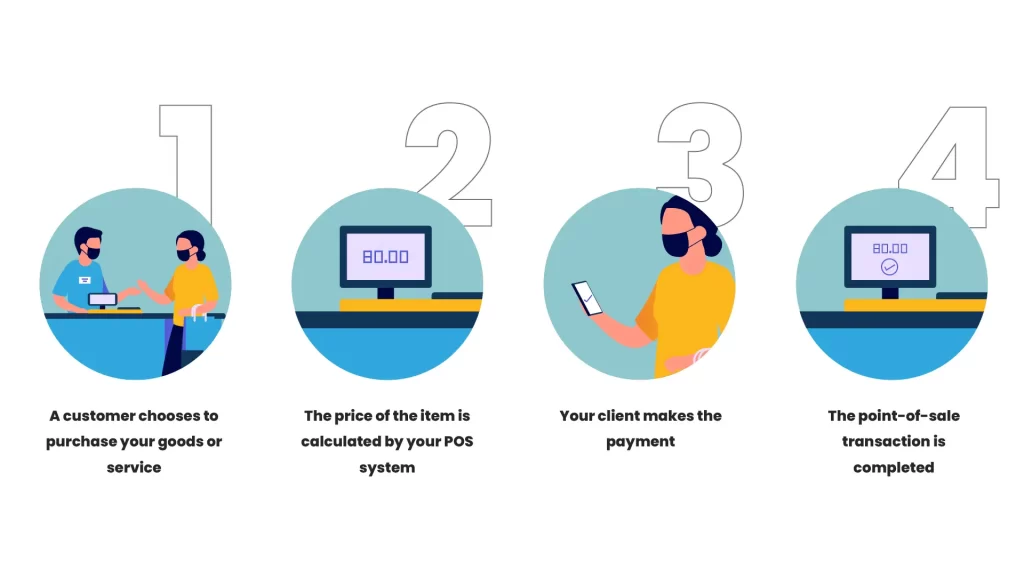
Customer checkout: Scan products using a barcode scanner or select items on a touchscreen.
Payment processing: Accept cash, card, or mobile payments; UK regulations often prefer contactless transactions for speed.
Receipt generation: Print or email receipts instantly.
Inventory update: The system automatically deducts sold items from stock.
Reporting: Sales data is logged for daily or monthly reports.
A restaurant using TouchBistro UK pricing can take orders at tables via tablets, instantly sending them to the kitchen and updating stock for ingredients.
Inventory Tracking and Management
POS systems track inventory in real time. For example:
Low stock alerts: Notify managers when products need restocking.
Supplier integration: Automatic reordering for consistent stock levels.
Stock transfers: Easily move items between multiple UK locations.
Data Sync and Reporting
POS systems sync all sales and inventory data across devices. Features include:
Multi-location reporting: Perfect for businesses with multiple branches.
Sales analytics: Identify best-selling products and peak hours.
Financial summaries: Simplify VAT reporting and compliance.
This feature ensures managers make data-driven decisions, saving time and reducing errors.
4. Types of POS Systems in the UK
Retail POS vs. Restaurant POS vs. Mobile POS
Retail POS: Optimised for shops, includes barcode scanning, inventory management, and customer loyalty features.
Restaurant POS software UK: Includes table management, menu customisation, and kitchen display integration.
Mobile POS system UK: Ideal for pop-up stores, market stalls, or delivery services; devices can operate without a fixed terminal.
Cloud POS vs. Traditional EPOS
Cloud POS: Data stored online, accessible remotely, and easy to update. Example: Moneypex POS cloud solution UK.
Traditional EPOS: Installed locally, more secure but less flexible for remote operations.
Cloud-based solutions are increasingly preferred by UK SMEs due to flexibility, low maintenance, and real-time reporting.
5. Top POS Systems in the UK Market
Best for: UK retailers and hospitality businesses seeking a cloud-based solution.
Features: Inventory management, sales analytics, multi-location support, contactless payments, VAT reporting.
Lightspeed POS
Best for: Growing retail and restaurant businesses.
Features: Cloud-based, e-commerce integration, detailed reporting, loyalty programs.
EPOS Now
Best for: Small to medium-sized businesses.
Features: Affordable, intuitive interface, integrated payment solutions.
Zettle by PayPal
Best for: Mobile payments and small retail setups.
Features: Easy card reader setup, real-time reporting, PayPal integration.
TouchBistro
Best for: Restaurants and cafes.
Features: Table management, menu customization, staff management, kitchen integration.
SumUp POS
Best for: Micro-businesses and mobile vendors.
Features: Simple hardware, cloud-based reporting, card reader functionality.
6. Benefits of Using a Modern POS System
Improved Efficiency, Accuracy, and Customer Experience
Faster checkout reduces queues, improving customer satisfaction.
Accurate transactions minimise human errors.
Employees spend less time on manual calculations and stock checks.
For instance, a café in Manchester using SumUp POS system UK reported a 30% faster checkout process and fewer stock discrepancies.
Real-Time Insights, Security, and Compliance
Cloud POS provides real-time sales and inventory data, enabling better decisions.
Secure data storage protects sensitive customer and financial information.
Built-in VAT and GDPR compliance features reduce administrative workload.
A retail chain using EPOS Now for small business easily generates VAT reports for HMRC, ensuring compliance without manual calculations.

Ready to Upgrade Your POS System?
If you’re a UK retailer or hospitality business looking to streamline operations, boost efficiency, and enhance customer experience, upgrading to a modern POS system is essential.
Book a Free Demo of leading UK POS software today and see how Moneypex POS, Lightspeed, EPOS Now, Zettle by PayPal, TouchBistro, and SumUp POS can transform your business. Experience real-time insights, effortless inventory management, and faster checkouts that delight customers.
FAQ – People Also Ask
1. What is a POS system and how does it work?
A POS system is technology that processes sales, manages inventory, and handles payments. It works by scanning products, processing payments, updating stock, and generating reports.
2. What are the main components of a POS system?
Key components include POS terminals, barcode scanners, receipt printers, cash drawers, card readers, and the software that manages sales and inventory.
3. Which is the best POS system for retail/restaurants in the UK?
For retail: Moneypex POS or Lightspeed POS. For restaurants: TouchBistro. For mobile businesses: Zettle by PayPal or SumUp POS.
4. How does cloud POS differ from traditional EPOS?
Cloud POS stores data online, offers remote access, automatic updates, and easier scalability. Traditional EPOS stores data locally and is less flexible for remote operations.
5. Can POS systems help with VAT and compliance in the UK?
Yes, modern POS systems automatically calculate VAT, generate reports for HMRC, and include GDPR compliance features.